
In 2026, SEO is no longer about chasing high-volume keywords alone. The real winners are those leveraging Zero-Search Volume Keywords — a powerful, underrated strategy that delivers fast rankings, low competition, and high conversions.
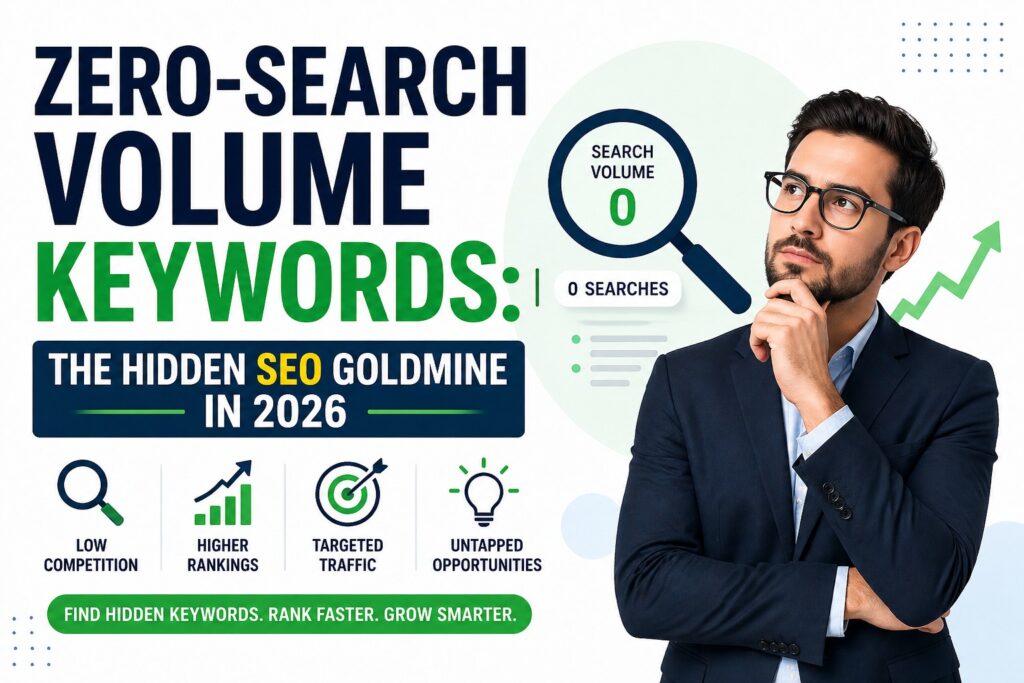
If you’re struggling to rank your website, this guide will show you how to tap into hidden SEO keywords, SEO Services, dominate search results, and build long-term organic traffic using a smart low competition keyword strategy.
1. Introduction to Zero-Search Volume Keywords
What Are Zero-Search Volume Keywords?
Zero-search volume keywords are search terms that SEO tools, SEO Services report as having no monthly search traffic. However, this data is often misleading.
These keywords usually include:
- Long-tail keyword phrases
- Conversational queries
- Voice search keywords
- New or trending topics
Example:
- “best SEO tools” (high competition)
- “best free SEO tools for beginners in 2026 with no budget” (Zero-Search Volume Keywords)
Why Zero-Search Volume Keywords Are Trending in 2026
With the rise of:
- AI-powered search engines
- Voice assistants
- Personalized search results
Users now search in natural language, creating countless queries that tools cannot track.
This makes keyword research without tools more important than ever.
High-Ranking SEO Keywords Used in This Strategy
To maximize rankings, this blog integrates powerful keywords like:
- zero search volume keywords strategy
- low competition keywords SEO
- hidden keywords for SEO
- long tail keyword strategy 2026
- how to find untapped keywords
- SEO keyword research techniques
2. Price Details – Cost of Using Zero-Search Keyword Strategy
Is This SEO Strategy Expensive?
One of the biggest advantages of zero-search keywords is low cost.
You can implement this strategy with:
- No expensive tools
- Minimal backlinks
- Basic content writing skills
Free vs Paid Keyword Research Methods
Free Methods (Highly Effective)
- Google Autocomplete
- “People Also Ask” section
- Quora and Reddit discussions
- YouTube search suggestions
- Customer queries
Paid Tools (Optional)
- Optional Premium Tools for Faster Growth
- Advanced Resources to Accelerate Your Strategy
- Invest in Tools to Scale Your Results
- Premium Solutions for Competitive Advantage
- Upgrade Your Workflow with Advanced Tools
Pro Tip: Even without paid tools, you can dominate using organic keyword discovery methods.
ROI (Return on Investment)
Compared to traditional SEO:
- Lower cost
- Faster ranking
- Higher conversion rates
This makes it one of the best SEO Services strategies for beginners and startups in 2026.
3. Features of Zero-Search Volume Keywords
Extremely Low Competition
Most marketers ignore keywords with zero volume.
Result:
- Easy rankings
- Less SEO effort
- Quick visibility
High User Intent
Zero-search keywords are highly specific.
Example:
- “buy laptop” vs
- “best budget laptop under 50000 for students 2026”
Specific keywords lead to:
- Higher click-through rates
- Better engagement
- More conversions
Voice Search Optimization
Voice search is growing rapidly.
People search like:
“What is the best way to find Zero-Search Volume Keywords?”
These queries:
- Are not tracked properly
- Represent real users
Faster Ranking Potential
Because competition is low:
- You can rank within weeks
- Even with a new website
- Without backlinks
Content Clustering Advantage
You can build topical authority by targeting multiple related keywords.
Example cluster:
- zero search volume keywords
- hidden keyword strategy
- long tail SEO techniques
- keyword research without tools
Google rewards this with:
- Higher rankings
- Better indexing
- Increased authority
Future-Proof SEO Strategy
Zero-search keywords align with:
- AI search engines
- Conversational queries
- Semantic search
This makes them a long-term SEO investment.
4. Pros & Cons of Zero-Search Keywords :-
Pros :-
Easy to Rank
Low competition means faster results.
High Conversion Rate
Specific intent = better leads and sales.
Ideal for Beginners
Even new websites can rank.
Low Cost SEO Strategy
No need for expensive backlinks or tools.
Scalable Traffic Growth
Multiple keywords = steady traffic increase.
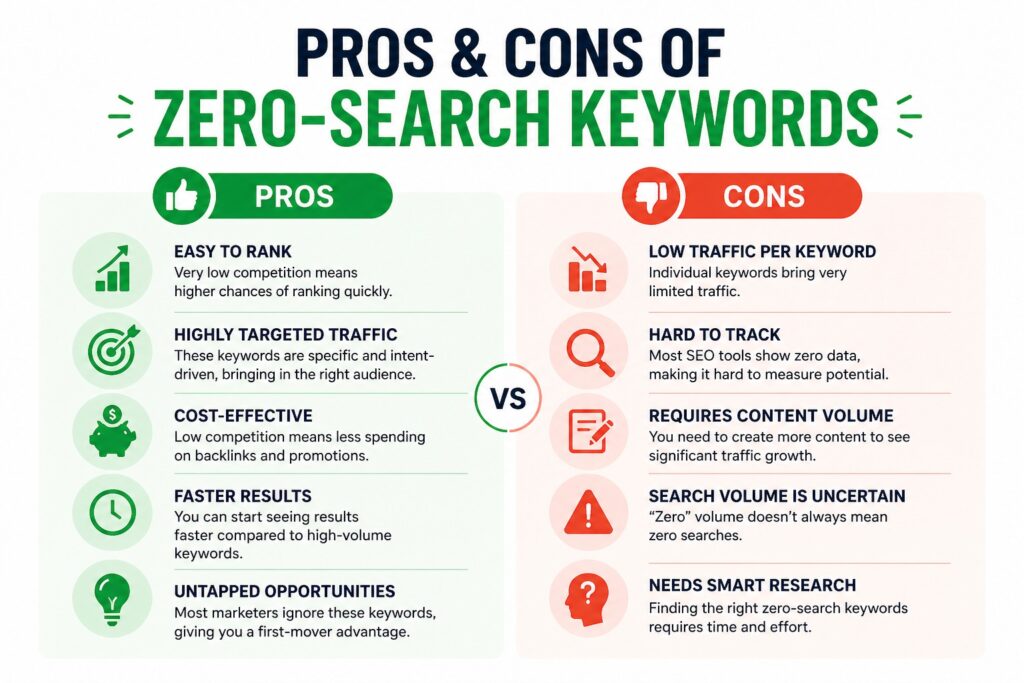
Cons :-
Low Traffic Individually
Each keyword brings limited traffic.
Requires Content Volume
You need multiple articles to scale.
Hard to Measure Initially
SEO tools may not show accurate data.
Requires Smart Research
You must understand user intent deeply.
5. Comparison with Other SEO Strategies
Zero-Search vs High-Volume Keywords
| Factor | Zero-Search Keywords | High-Volume Keywords |
| Competition | Very Low | Very High |
| Ranking Difficulty | Easy | Hard |
| Traffic | Low (per keyword) | High |
| Conversion Rate | High | Medium |
| Cost | Low | High |
Zero-Search vs Long-Tail Keywords
| Factor | Zero-Search | Long-Tail |
| Search Volume | Not tracked | Low but visible |
| Competition | Lower | Low |
| Strategy | Discovery-based | Tool-based |
Insight:
Zero-search keywords are hidden long-tail opportunities.
6. FAQs About Zero-Search Keywords :-
Do zero-search keywords really work?
Yes. Many keywords marked “0 volume” still get traffic due to:
- Voice search
- New trends
- AI-based queries
How do I find zero-search keywords?
Best Methods
- Google suggestions
- Forums and communities
- Social media questions
- Customer feedback
How many keywords should I target?
Target:
50–100 keywords for best results
This creates a strong content network.
Are they good for affiliate marketing?
Yes, because they:
- Target buying intent
- Convert better
- Have low competition
Can I rank without backlinks?
Yes, especially with:
- High-quality content
- Proper keyword placement
- Internal linking
How long does it take to rank?
Typically:
- 2–6 weeks for rankings
- Faster than traditional SEO
Is this strategy safe for the future?
Absolutely.
It aligns with:
- AI-driven search
- Semantic SEO
- User intent optimization
7. Conclusion :–
In the fast-changing world of SEO, where competition is growing every day and traditional keyword strategies are becoming saturated, Zero-Search Volume Keywords have emerged as a powerful and sustainable solution. What once seemed like “useless” data in keyword tools is now proving to be one of the smartest ways to gain a competitive edge in search rankings.
The biggest misconception in SEO has always been that only high-volume keywords drive traffic. But in 2026, search behavior has evolved. Users are no longer typing short, generic queries — they are asking detailed, conversational, and highly specific questions. These queries often go untracked by traditional SEO tools, yet they represent real user intent and real opportunities.
While others compete for high-volume keywords, you can:
- Rank faster
- Spend less
- Generate targeted traffic